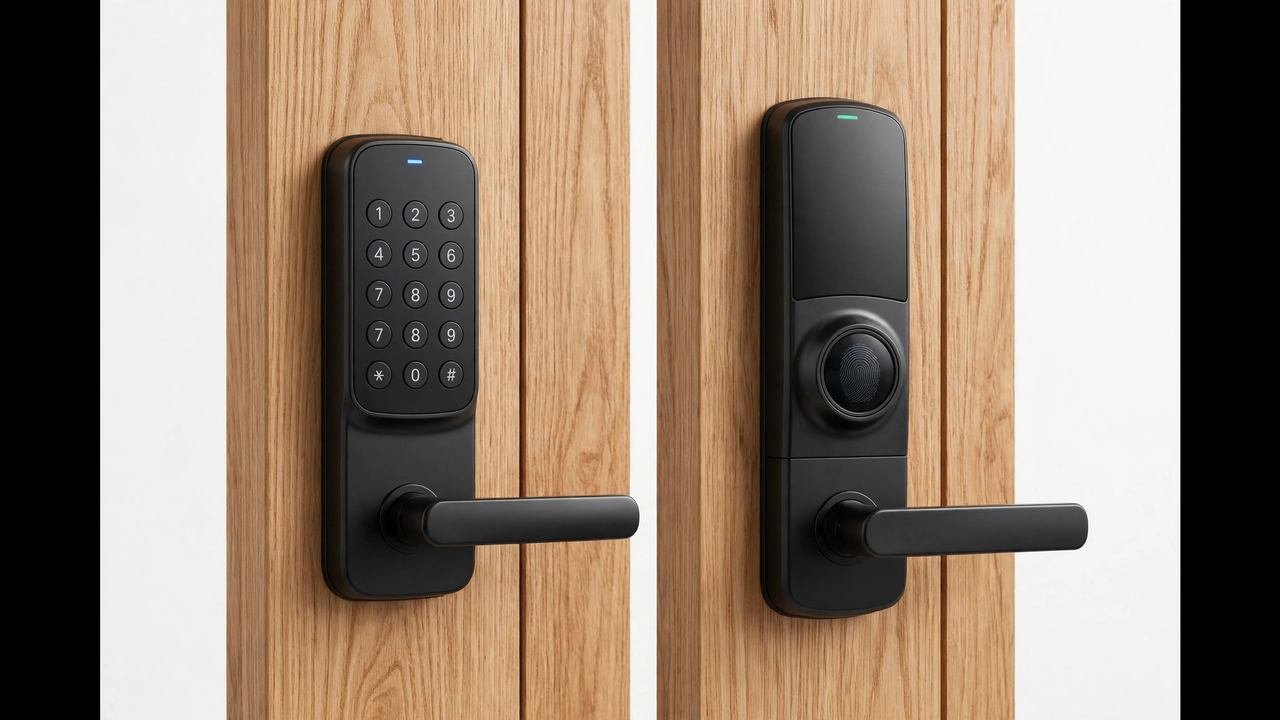
The Yale vs Samsung smart lock question comes up constantly in Australia, and for good reason: they’re the two big names you’ll actually find on shelves here. Yale owns the traditional lock world through ASSA ABLOY and sells smart deadlatches at Bunnings. Samsung’s digital door locks — the push-pull models you see in design magazines — are sold through specialists like Digital Door Locks Australia.
But they’re very different products for very different doors. This comparison uses real Australian prices (checked October 2026), covers the installation reality most reviews skip, and ends with a straight recommendation by buyer type — not a fake photo-finish.
The two brands in 30 seconds
Yale is a lock company that added smarts. Its Australian range (Unity deadlatches, ByYou mortise locks) is designed for local doors, certified to the Australian lock standard AS4145.2, and supported by a locksmith network that actually stocks parts. You can buy the Unity at Bunnings today.
Samsung (via Samsung SDS, its digital lock division) is a tech company that makes locks. Its push-pull mortise locks are beautifully engineered, with excellent fingerprint sensors and thoughtful security extras, but they’re designed primarily for Asian markets and sold in Australia through specialists rather than big-box retail. Installation is more involved, and local parts support is thinner.
Yale vs Samsung smart lock Australia: model-by-model
Yale Unity Entrance Lock ($469) vs Samsung SHP-A30 (~$569)
This is the entry-level matchup. The Yale Unity at $469 from Bunnings is a smart deadlatch: app control, key cards, optional PIN keypad and Wi-Fi bridge, AS4145.2 certified, 2-hour fire rating, and Yale’s DualDoor feature that unlocks the security screen and main door in one action — made for Australian homes.
The Samsung SHP-A30 launched at an RRP of $569 at Bunnings back in 2020. It’s a slimmer digital lock (no handle — just the lock body) with PIN, RFID and app-generated visitor codes, plus Samsung’s randomiser mode that defeats PIN-guessing from worn buttons. Minimalist and neat, but less of a complete door solution than the Yale — no lever, no latch, just the locking unit.
Verdict at this level: Yale. It’s cheaper, more complete, certified to Australian standards, and easier to buy.
Yale ByYou D Pro ($739) vs Samsung SHP-DP609 (mid-range)
The main event. The Yale ByYou D Pro ($739 from Yale’s AU store, tax included) is a premium mortise-style smart lock: fingerprint, PIN, RFID card, app and mechanical key, managed through the Yale Home app with scheduling and access logs.
The Samsung SHP-DP609 is the iconic push-pull: push the handle to enter, pull to exit, and the mortise bolt follows. Fingerprint (up to 100 prints), PIN (up to 100 codes), RFID, mechanical key, intrusion alarm, fake-PIN randomiser, auto-locking, and about 10 months from 8 AA batteries. Samsung’s AU range runs from the A30 up to the SHP-DR708 at $997, with the DP609 sitting in the middle.
Both need a mortise pocket in the door edge — budget $150-$250 for professional fitting if your door doesn’t already have one. On hardware alone this is close: Samsung’s fingerprint sensor and push-pull ergonomics are genuinely excellent; Yale counters with stronger local support and a brand every Australian locksmith knows.
Samsung SHP-DR708 ($997) — the tier Yale doesn’t contest
The DR708 is Samsung’s flagship push-pull at $997 through Australian specialists — a sleeker alternative to the DP609 with a large open/close button instead of a full handle. Yale has no direct equivalent at this price; the ByYou D Pro tops out at $739. If money is no object and you want the most premium-feeling lock available in Australia, Samsung wins this tier by default.
Head-to-head: the seven factors that decide it
1. Price
Yale is cheaper at every comparable tier: $469 vs ~$569 at entry level, $739 vs mid-$600s+ for premium mortise. Samsung’s range stretches higher ($997 DR708) if you want the absolute flagship. Both brands’ Wi-Fi bridges/modules cost extra — factor that in, because neither brand’s base Bluetooth setup gives you remote access.
2. Door fit and installation
This is where the comparison is really decided. Yale’s Unity is a deadlatch — it suits the standard Australian front door and installs with basic tools. Samsung’s locks are mortise locks — the body sits inside the door edge. As Whirlpool users note, Samsung locks “require additional hole drilling and mortises to be chiselled from the door frame.” If your door already has a mortise lock, it’s a swap. If not, it’s a locksmith job. For most Australian homes, Yale fits; Samsung needs work.
3. Entry methods
Both cover the essentials: fingerprint, PIN, RFID/card, app, mechanical key backup. Samsung edges ahead on fingerprint capacity (100 prints) and its randomiser anti-guessing mode. Yale counters with DualDoor (screen + main door in one action) and Apple Home Key support on the ByYou Pro — a big deal for iPhone households.
4. App and smart home
Samsung’s SmartThings is the more mature smart home platform — if your house already runs on SmartThings, Samsung locks slot in beautifully. Yale Home is a competent lock-focused app with scheduling and logs, but Australian owners report it can be fussy: the Wi-Fi bridge wants to sit within a few metres of the door on 2.4GHz, and Bluetooth range through brick walls disappoints. Yale also talks to Google, Alexa and SmartThings via the bridge, plus Apple HomeKit on some models. Aqara still beats both for Apple households — see our best smart lock roundup.
5. Certifications
Yale’s Unity range carries AS4145.2:2008 certification (SL8/D8), a 2-hour fire rating to AS1905.1-2015, and AS1428.1 accessibility compliance on the lever version. For insurance and strata purposes in Australia, that paperwork matters. Samsung’s locks are well engineered but certified to different (primarily Asian/international) regimes — check with your insurer before fitting one to a fire-rated door.
6. Support and parts in Australia
Yale wins clearly. It’s an ASSA ABLOY brand with decades of Australian distribution; locksmiths stock Yale parts and know the products. Samsung digital locks are sold through a smaller specialist network — good specialists (Digital Door Locks Australia offers free installation promotions), but if something breaks in five years, Yale parts will be easier to find.
7. Battery and reliability
Both run on AA batteries (4 for Yale deadlatches, 8 for the Samsung push-pull) lasting roughly 6-12 months depending on use. Both warn before dying and both have mechanical key backups. Real-world reliability complaints for both brands cluster around the same things: Wi-Fi connectivity and app quirks, not the locking mechanism itself.
What Australian owners actually say
Specs tell half the story. The other half comes from Whirlpool forums and installer feedback:
Yale owners consistently praise the hardware and the DualDoor screen-door feature. The most quoted real-world review: a Whirlpool user who “absolutely loves it” when the Yale Unity auto-unlocks as they walk up the driveway. The recurring complaints are about the app and connectivity — Bluetooth range through brick walls underwhelms, the Wi-Fi bridge needs to sit within a few metres of the door on a 2.4GHz network, and battery life suffers in Wi-Fi-heavy setups. One specialist installer puts it bluntly: Yale suits buyers “comfortable with app-based management” who actively monitor battery levels rather than waiting for warnings.
Two Yale-specific gotchas worth knowing. First, the warranty excludes fully exposed coastal positions — if your front door cops direct sea spray, that’s a genuine commercial risk on a $469-$739 lock. Second, several owners report the auto-unlock timing can’t be fine-tuned the way they’d like; it unlocks on approach, full stop.
Samsung owners rave about the fingerprint sensor — widely considered the best in the business — and the push-pull ergonomics. Complaints centre on installation complexity (the mortise pocket catches out first-timers) and the SmartThings dependency: if you’re not in the Samsung ecosystem, you lose much of the remote-management polish. Availability of local installers familiar with Samsung digital locks is thinner outside the capital cities.
The pattern: Yale’s pain points are software and connectivity; Samsung’s are installation and ecosystem. Neither brand has a meaningful edge in mechanical reliability — both make locks that physically last.
Running costs: batteries, bridges and the fine print
The sticker price isn’t the whole price. Over five years, expect:
- Batteries: Yale deadlatches take 4 AAs; Samsung push-pulls take 8. At 6-12 months per set depending on use, that’s roughly $10-$25 a year in batteries either way — trivial, but buy lithium AAs for better cold-weather performance and longer life.
- Connectivity hardware: Yale’s Connect bridge (for remote access) and Smart Keypad (for PIN entry) are sold separately — budget around $100-$150 each at retail. Samsung’s Wi-Fi models include connectivity, but the module versions vary by model; confirm what’s in the box before comparing prices.
- Installation: Yale Unity on a standard deadlatch door: DIY in under an hour. Samsung mortise or Yale ByYou: $150-$250 for a locksmith. That labour cost can erase Yale’s price advantage if you’re comparing a DIY Yale against a pro-fitted Samsung — or vice versa.
- No subscriptions: neither brand charges ongoing fees for core locking, scheduling or access logs. If a retailer tries to sell you a “smart lock service plan,” walk away.
Five-year total cost of ownership for a typical buyer: roughly $550-$650 for a DIY Yale Unity setup, $850-$1,000 for a Yale ByYou D Pro fitted by a locksmith, and $800-$1,300 for a Samsung push-pull with professional installation. The Samsung premium is real — you’re paying for design and fingerprint tech, not extra security.
Verdict: which should you buy?
Buy Yale if: you want the safest default choice for an Australian home — easier fit, Australian certifications, Bunnings availability, stronger local support, and lower prices. The Unity Entrance Lock is the pick for standard doors; the ByYou D Pro if you want premium mortise.
Buy Samsung if: you love the push-pull design, prioritise fingerprint performance, already live in the SmartThings ecosystem, or want the $997 flagship DR708 experience. Just go in with eyes open about mortise installation costs and thinner local parts support.
Buy neither if: you’re renting (see our renter-friendly smart locks — both brands’ main models need door modification), or your household is all-in on Apple (the Aqara U100’s Home Key support is better and cheaper).
For the full market picture beyond these two brands, see our best smart lock Australia 2026 guide and the installation cost breakdown before you commit.
Frequently asked questions
Which is better, Yale or Samsung smart lock?
Yale suits most Australian homes better: local door designs, AS4145.2 certification, fire ratings and stronger parts support. Samsung wins on design and fingerprint tech for buyers who want a premium push-pull lock and use SmartThings.
How much do Yale and Samsung smart locks cost in Australia?
Yale: $469 (Unity, Bunnings) to $739 (ByYou D Pro, Yale AU store). Samsung: ~$569 (SHP-A30 RRP) to $997 (SHP-DR708), with the SHP-DP609 between. Add $150-$250 for professional mortise installation. Prices checked October 2026.
Do Samsung smart locks work with Australian doors?
Yes, but they’re mortise-style — the lock body needs a pocket in the door edge. Fine as a swap for an existing mortise lock; otherwise budget for a locksmith. Yale’s Unity deadlatch suits standard Aussie doors with simpler DIY installation.
Can I get parts and support for Samsung locks in Australia?
Through a smaller specialist network — Digital Door Locks Australia is the main Samsung digital lock specialist. Yale’s ASSA ABLOY distribution means any locksmith can usually source parts. For a lock you expect to keep a decade, that difference matters.
Which is more secure, Yale or Samsung?
Both use quality mechanical hardware with intrusion alarms and encrypted electronics. Yale’s AS4145.2 certification gives it a documented Australian security rating, which insurers recognise. Real-world security depends more on your door, frame and installation quality than on the brand badge.
Prices checked October 2026 from Bunnings, Yale’s AU store and Australian specialist retailers.
Manufacturer reference: Yale’s official ByYou D Pro page lists full specifications for Yale’s premium smart mortise lock.