
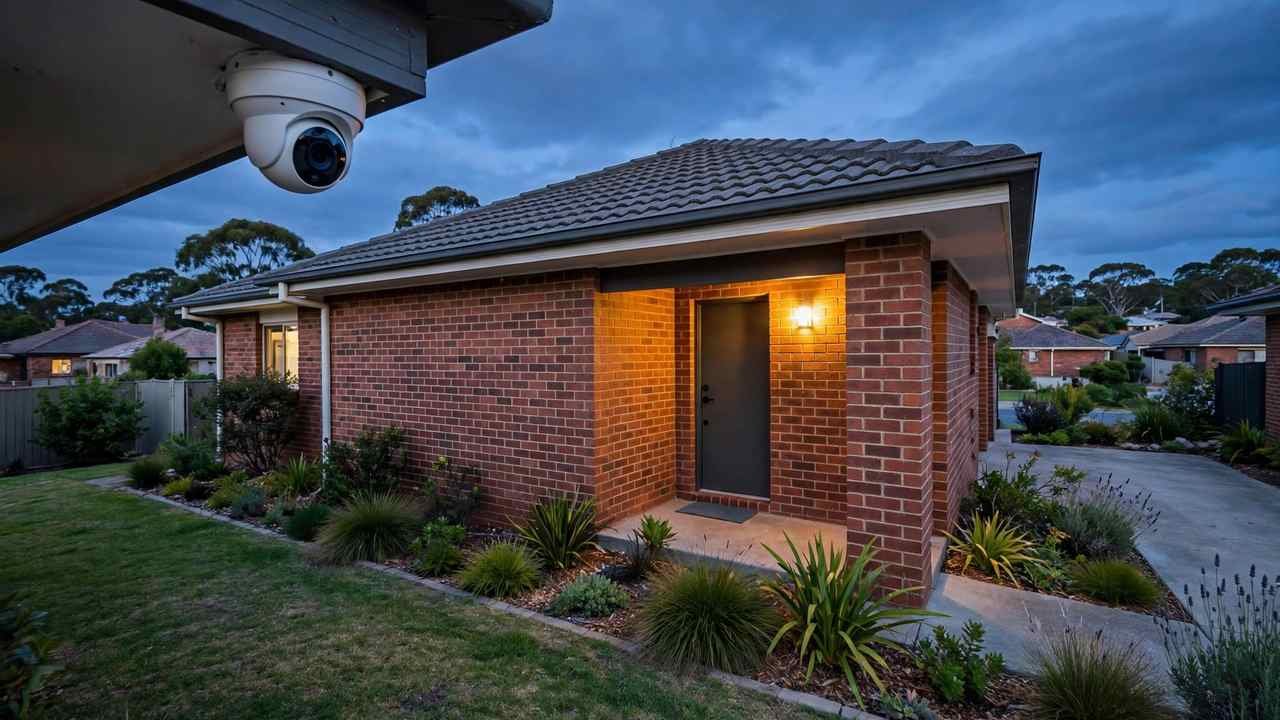
Do security cameras deter burglars? It’s the question behind half of all camera purchases, and the honest answer is more complicated than the marketing suggests. Cameras do discourage some break-ins — but deterrence is actually the least certain thing a camera does for you. What cameras reliably deliver is detection and evidence: knowing something happened, and being able to prove what.
This article looks at what Australian data actually says — from the Australian Institute of Criminology, the Australian Bureau of Statistics, and state crime statistics — rather than repeating the unsourced percentages that circulate on vendor blogs. The picture that emerges is genuinely useful: cameras are worth having, but they’re one layer in a system, and some of the layers that matter more are cheaper.
The Short Answer
Visible security cameras deter opportunistic burglars — the kind responsible for most break-ins — but they’re less effective against determined or experienced offenders. Where cameras add the most measurable value is after an incident: footage helps police identify offenders, supports insurance claims, and clears up disputes. An Australian Institute of Criminology study found that when CCTV footage was requested and provided, clearance rates rose by an estimated 20 per cent — a concrete benefit that doesn’t depend on scaring anyone off.
So: buy cameras for what they reliably do (record evidence, alert you, remove doubt), treat deterrence as a welcome bonus, and don’t rely on cameras alone.
What “Deterrence” Actually Means (and Why It’s Hard to Measure)
Deterrence is, by nature, invisible. A burglar who walks past your house because they saw a camera never shows up in any statistic — there’s no record of crimes that didn’t happen. That’s why honest researchers are cautious about deterrence claims, and why you should be sceptical of any blog that states a precise percentage like “cameras prevent 67% of burglaries” without a source. Those numbers are almost always marketing dressed as research.
What we can measure: offender interviews, clearance rates where footage exists versus where it doesn’t, and burglary patterns in high-coverage areas. All three point the same direction — cameras help — but none proves a camera alone stopped a specific break-in.
Who You’re Trying to Deter: Two Kinds of Burglar
Criminology research, including Australian studies, consistently distinguishes between two offender profiles, and cameras affect them very differently.
The opportunistic burglar (most break-ins)
The majority of residential burglaries in Australia are opportunistic. The offender is looking for quick entry, a quick search of the obvious spots (bedroom drawers, kitchen bench, home office), and a quick exit. They choose targets with easy access and minimal time inside. Victorian crime data analysis notes that a meaningful share of burglaries involve no forced entry at all — the offender simply walked in through an unlocked door or window. One Victorian analysis puts unlocked doors or windows as a factor in up to 80% of aggravated burglaries.
Against this offender, visible cameras work well. The opportunistic burglar is making a fast risk calculation: which house on this street is easiest? A visible camera, a sensor light, a barking dog sign — each one tips the calculation toward the next house. The deterrent effect here comes from visibility, not resolution. A $120 camera that’s clearly visible deters more than a $600 camera nobody notices.
The determined or experienced offender (fewer, but serious)
A smaller number of offenders plan their targets: they know what’s inside, they’ve watched the routine, and a camera is an obstacle to manage rather than a reason to leave. They may cover their faces, approach from blind spots, or simply accept the risk. Against this offender, cameras deter less — but they become more valuable as evidence, because a planned burglary is exactly the kind police can investigate with good footage.
The uncomfortable truth: no camera stops someone who has decided to break into your specific house. Cameras make your house a worse choice than the alternative and make the aftermath provable — valuable, but not the force field the ads imply.
What Australian Data Shows
Burglary has fallen dramatically — and security played a part
Between 2001 and 2009, recorded burglary in Australia fell by 49 per cent, motor vehicle theft by 57 per cent, according to Australian Bureau of Statistics recorded-crime data analysed by the Australian Institute of Criminology (AIC, Trends & Issues No. 495). Researchers attribute the drop to multiple factors — better vehicle immobilisers, improved household security, demographic shifts — not cameras alone. But the direction is clear: as Australian homes got harder to break into, break-ins fell. Cameras are part of that hardening, alongside deadlocks, sensor lights and alarms.
CCTV measurably helps investigations
An AIC study of the NSW rail network found that matters where CCTV footage was requested had a 24.8 per cent clearance rate, compared with 21 per cent where it wasn’t. When requested footage was actually provided, it was associated with an estimated 20 per cent increase in clearance rates. Nine in ten investigators used requested CCTV when it was available.
That study wasn’t about homes, so apply it carefully. But it demonstrates the mechanism: footage converts unknown offenders into identifiable ones. Murrumbidgee police have described residential CCTV as integral to investigating a local spike in aggravated break-ins — the same dynamic, at suburb level.
The image-quality catch
Here’s the detail that undoes a lot of camera owners: in that same AIC research, one in three investigators still encountered problems with image quality or coverage. Owning a camera and capturing something usable are different things. A blurry figure at 15 metres helps nobody. This is why placement matters more than price — a camera positioned to capture faces at entry points produces evidence; a camera mounted too high produces atmosphere.
Homes with security are burgled less
Australian Institute of Criminology research widely cited in Australian security guidance finds that homes without security systems are up to three times more likely to be burgled than homes with them. “Security systems” here means the package — locks, alarms, cameras, lighting — not cameras alone. Which brings us to the ranking that actually matters.
What Deters Burglars Most: An Honest Ranking
If deterrence is the goal, here’s how the measures stack up, based on offender research and Australian crime data:
- Locked doors and windows. The single biggest preventable factor. A large share of burglaries involve no forced entry — the offender tried the handle and it opened. Deadlocks on every external door, window locks on ground floors, and the habit of actually using them beat every gadget.
- Visibility from the street. Trimmed hedges, a visible front door, no hidden alcoves. Burglars avoid being seen; a house visible to neighbours and passers-by is a risky target.
- Sensor lighting. Cheap, effective, and covers the side passages and rear yards where cameras alone can’t deter. Light removes the cover of darkness that opportunistic offenders rely on.
- Visible cameras and signage. This is where cameras earn their deterrence rating — visible cameras at the front and rear, plus a simple “CCTV in operation” sign. Remember: the deterrence comes from being seen, not from megapixels.
- Alarm system (even unmonitored). The noise, the panel visible through the window, the sticker on the door — all of it feeds the risk calculation. Self-monitored kits that alert your phone cost a few hundred dollars with no monthly fee.
- Appearance of occupancy. Timed lights, a car in the driveway, mail collected. Most burglaries happen in daylight when homes are empty; looking occupied removes the opportunity.
- A dog. Unscientific but consistently reported by offenders: a barking dog is one of the strongest single deterrents. Not practical advice for everyone, but worth knowing where it sits.
Notice that cameras sit at number four — valuable, but not the foundation. Anyone selling you cameras as the complete answer is selling you an incomplete system. And every item above the camera line is cheaper than a camera system.
Making Your Cameras Deter More (Not Just Record More)
If you’ve got cameras or you’re buying them, these choices maximise the deterrent effect:
- Make them visible. Don’t hide cameras. Mount them where they’re obvious from the approach paths — under eaves at the front door, covering the driveway. A hidden camera records; a visible camera deters and records.
- Add signage. A “CCTV in operation” sign at the front gate or door costs a few dollars and extends the deterrent effect beyond the cameras’ field of view. It also signals lawful intent, which helps if a neighbour ever questions your setup.
- Pair with lighting. A camera plus a sensor light is worth more than either alone. The light deters, and it gives the camera the illumination it needs for identifiable night footage.
- Use the deterrent features. Many cameras have spotlights, sirens or two-way talk. A spotlight that snaps on plus a voice warning (“You are being recorded”) is dramatically more deterring than silent recording — and it’s the closest a camera gets to actively intervening.
- Keep them maintained. A camera with a spider web across the lens, a dead battery, or a full memory card deters nobody and records nothing. Check the live feed monthly.
Where Cameras Disappoint (Manage These Expectations)
Honest limitations worth knowing before you buy:
- They don’t stop determined offenders — as discussed, a targeted burglary happens regardless. Cameras convert it from an unsolved crime to a solvable one, which is valuable but different.
- Footage quality is often the weak link. One in three investigators in the AIC research hit quality or coverage problems. Test your cameras at night, at the distances that matter, before you need the footage.
- They don’t cover what they can’t see. Blind spots, approach angles, and the simple fact that most homes have more entry points than cameras. Placement discipline matters more than camera count.
- Cloud cameras die with the internet. If your deterrence-and-evidence strategy depends on cloud recording, an NBN outage removes it. Local recording keeps working — one more reason to weigh storage options carefully.
- They can create a false sense of security. The most dangerous outcome isn’t a camera failing — it’s a homeowner who stops locking the back door because “the cameras will catch them.” Cameras are a layer, not a replacement for locks.
The Bottom Line
Do security cameras deter burglars in Australia? For the opportunistic offenders behind most break-ins: yes, visibly-mounted cameras make your home a less attractive target — especially combined with lighting, signage and locked doors. For determined offenders: less so, but the footage becomes the evidence that gets them caught. Australian data supports both halves of that answer: burglary has roughly halved since 2001 as homes hardened, and CCTV is measurably associated with higher clearance rates when footage is usable.
Buy cameras for the right reasons — evidence, alerts, and the deterrent bonus of visibility — as part of a layered setup where locks and lighting come first. That’s the case that survives contact with the data. Our 2026 cost breakdown shows what a system should cost; the placement guide shows where each camera goes.
Frequently Asked Questions
Do security cameras deter burglars in Australia?
Visible cameras deter opportunistic burglars — the type behind most Australian break-ins — by making your home a riskier target than the next one. They’re less effective against determined offenders, but footage measurably helps police: an AIC study linked provided CCTV footage to a ~20% increase in clearance rates.
What deters burglars more than security cameras?
Locked doors and windows rank first — a large share of burglaries involve no forced entry. Street visibility, sensor lighting, alarm systems and the appearance of occupancy all rank alongside or above cameras for deterrence. Cameras work best as one layer combined with these measures.
Do burglars avoid houses with cameras?
Opportunistic burglars tend to skip houses with visible security — cameras, lights, alarms — in favour of easier targets. However, experienced offenders may simply work around cameras by covering their faces or approaching from blind spots. Visibility is key: a camera nobody notices deters nobody.
Is CCTV footage useful to Australian police?
Yes. Australian Institute of Criminology research found nine in ten investigators used requested CCTV when available, and providing footage was associated with a ~20% lift in clearance rates. Police describe residential CCTV as integral to burglary investigations — but one in three investigators encountered image quality or coverage problems, so placement and resolution matter.
Should I put up signs saying I have security cameras?
Yes — signage is cheap deterrence that extends protection beyond your cameras’ field of view, and it signals lawful intent if neighbours ever question your setup. While not legally required for residential cameras in most states, it’s widely recommended by installers and police.
Sources
- Australian Institute of Criminology — Explaining the property crime drop: the offender perspective (Trends & Issues No. 495): aic.gov.au
- Techman Pat — Do home security cameras deter burglars in Australia (summarising AIC CCTV clearance research): compare.techmanpat.com.au
- VicPolice News — Burglary and aggravated home invasion in Victoria: patterns and prevention: vicpolicenews.com.au